Aster, Milady Mix Flower
An excellent dwarf variety (25 cm) for bedding , producing robust and bushy plants with resistance to wilt

Subcategories
There are 873 products.
An excellent dwarf variety (25 cm) for bedding , producing robust and bushy plants with resistance to wilt
Asparagus has grown in the wild in France since the time of Louis XIV. Originally only three different types were available, they were distinguished mostly by their thickness, ‘la grosse’, ‘la commune’ and ‘la sauvage’.
Cultivation become widespread in the mid-19th century, with populations often identified according to countries and towns where they were grown. Arguably the best known asparagus was cultivated at Argenteuil, situated just 14 kilometres northwest of Paris. For centuries Argenteuil was an important asparagus-growing district: at one time several thousand persons were employed in cultivating the crop.
Asparagus 'Precoce D'Argentuil’ or ‘Early Argenteuil‘ was listed by Vilmorin-Andrieux in 1885 as a selection from 'Giant Dutch Purple'. It is one of three subvarieties of Argenteuil (early, mid, and late) and is highly esteemed for its thick, rose-purple spears with tender tips and an excellent flavour.
It is an excellent choice for the impatient gardener. Earlier and hardier than most asparagus varieties, the spears are usually produced from seed struck plants in the second year and it will shoot earlier in the season than other varieties.
In France, Asparagus D'Argentuil is the traditional variety used to create the popular white asparagus by blanching the plants. White asparagus, nicknamed ‘edible ivory’ and ‘white gold’ typically sells for two to three times as much as the green-skinned variety due to the high cost of production and the short season. However, it is simply created by mounding earth over the spears as they begin to push out of the ground, thus keeping them from sunlight and the photosynthesis that would turn them green.
This noble stalk may cost a king's ransom for much of the year but when cultivated in the garden it is affordable for even us commoners and is uncommonly delicious.
Meaty and thick, golden-orange skin with a mild flavor. A great choice for its low acidity and high Vitamin C content.
History: The Golden Jubilee was first introduced in 1943 by the W. Atlee Burpee & Co. which was established in 1876. After almost 150 years Burpee continues and has grown into a very large organization. Golden Jubilee is sweet, mild and meaty. Its mild flavor pairs well with other ingredients and it holds its orange color when cooked. An All American Selections winner in 1943.
Open-pollinated (80 days)
Plant Habit: Indeterminate. Plant Size: 6’. Fruit Color: Orange. Shape: Globe. Size: 6-8 oz. 30 seeds
| Type | Tomato |
| Family | Nightshade Family |
| Temperature Soil | 70F |
| Temperature Daytime | 70-85F |
| Temperature Evening | 65+F |
| Lighting | Light, Full, 6-8 Hours / Day |
| Water | Heavy, 9 Gal / Day |
| Maturity | Long, 65-100 Days |
| PH Neutral | Ph Neutral, 5.5-6.8 |
| Zones | 2A-10b |
| Plant Placement | 2 Plants, 2 Per Row |
| Type | Cabbage |
| Family | Cabbage Family |
| Temperature Soil | 55-75F |
| Temperature Daytime | 55-70F |
| Temperature Evening | 35F+ |
| Lighting | Full, 4-6 Hours / Day |
| Water | Steady, 6 Gallons / Week |
| Maturity | Long, 60-120 Days Harvest |
| PH Neutral | 6.5-6.8 |
| Zones | 1A-9B |
| Plant Placement | 6 Plants, 3 Per Row |
Chinese chives are a perennial herb with flat, grass-like green leaves and a mild garlic-onion flavor, distinct from round onion chives; they form clumps, produce edible white flowers, and are used in Asian cooking for stir-fries, dumplings, and eggs, adding savory flavor and texture. They are heartier than regular chives, with a strong aroma when crushed, and are a staple in many Asian cuisines.
Leaves: Flat, long, and pale green, unlike the hollow, round leaves of common chives, with a strong garlic smell when crushed.
Plant: Forms clumps of foliage, reaching 10-20 inches tall, with edible white flowers on stalks.
Hardiness: A perennial that dies back in winter in colder climates but stays green in warmer zones.
Taste: Stronger, garlicky flavor than onion chives, but milder than raw garlic.
Culinary Uses: Used in dumplings, pancakes, stir-fries, egg dishes, soups, and salads; added at the end of cooking to preserve flavor.
Edible Parts: Leaves, flowers, and even seeds are edible.
Cultivated in Asia for over 3,000 years for culinary, medicinal, and ceremonial uses.
Yellow Chives: A variety with a milder taste and more delicate texture than standard garlic chives.
|
|
Herbs |
| Family | Family Varies |
| Temperature Soil | 50-60F |
| Temperature Daytime | 50-85F |
| Temperature Evening | 45F |
| Lighting | Partial, 2-4 Hours/Day |
| Water | Light, 6 Gallons/Week |
| Maturity | 65-100 Days Harvest |
| PH Neutral | 5.5-8.0 |
| Zones | 2A-10B |
| Plant Placement | 3 Plants, 3 Rows |
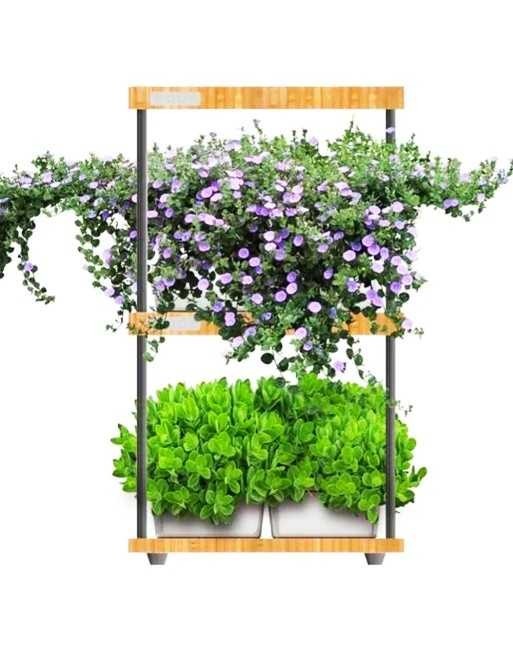
Anchusa capensis ‘Blue Angel’ displays tight clusters of small, rich blue flowers on narrow, upright plants. Cut back for rebloom, then let it reseed to enjoy next year. Deer resistant.
Prefers well-drained soil, though tolerates poor or dry soil once established. Summer Forget-Me-Not is great used in borders, mixed containers, or mass plantings.
White water spinach (Ipomoea aquatica) is a fast-growing aquatic vine with hollow, crisp stems (often white) and arrowhead-shaped leaves, related to sweet potatoes, prized in Asian cuisine for its mild, slightly sweet flavor and crisp texture, used in stir-fries, soups, or salads, offering nutrients like vitamins, minerals, and fiber.
Stems: Hollow, spongy, and can grow long, allowing them to float; they are often white or light green and root at nodes.
Leaves: Light green, arrowhead (sagittate) or heart-shaped, smooth, and float on water.
Flowers: Trumpet-shaped, typically white or pale purple with a mauve center.
Flavor & Texture
Taste: Mild, slightly sweet, and spinach-like.
Texture: The leaves are tender, while the hollow stems offer a pleasant crispness when cooked.
Habitat: Grows in water or moist soil in tropical climates.
Varieties: "White stem" and "green stem" are common; the white-stemmed type is often considered more tender and flavorful.
Uses: Stir-fried (especially with garlic/oyster sauce), added to soups, or eaten raw in salads.
Nutrition: Rich in vitamins, minerals (iron, calcium), fiber, and antioxidants like beta-carotene.
| Type | Spinach |
| Family | Amaranth Family |
| Temperature Soil | 45-65F |
| Temperature Daytime | 60-65F |
| Temperature Evening | 40F+ |
| Lighting | Full, 6-8 Hous Per Day |
| Water | Steady, 6 Gallons / Week |
| Maturity | Short, 35-55 Days Harvest |
| Zones | 3A-9B |
| Plant Placement | 4 Plants, 4 Per Row |

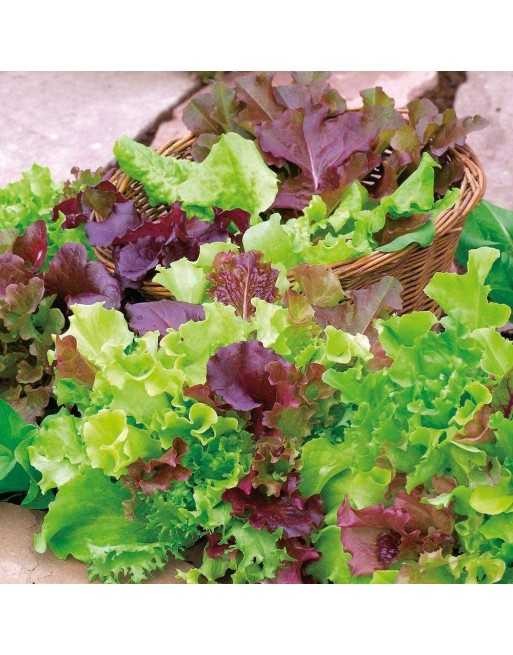
Lettuce seeds can be planted directly into the garden soil.
Sow the seeds directly into the garden soil beginning in early spring starting 2 weeks prior to the last frost-free date.
Plant the tiny seeds 1/4" deep and later thin to 10" apart. Seeds can be planted every 3 weeks for a staggered harvest or once again in late summer for a fall harvest. Fall planting can occur 10 weeks before your average first frost date.
Build up a raised row of soil about 8" wide. Scatter the seeds in a line on top and then cover with 1/4” to 1/2" of soil. Keep the soil evenly moist. Lettuce seeds will germinate in 5-10 days depending on the soil temperature. Germination is slower in the cold weather of spring.
Lettuce has shallow roots so gently mulch around it to deter weeds and retain soil moisture.
The ways to harvest lettuce include harvesting it as a baby green by picking individual young leaves, harvesting the outer leaves as needed and letting the plants grow, or by harvesting the entire head by slicing it off about an inch above the soil.
Each packet contains 500 Little Gem Lettuce seeds. Lactuca sativa. Annual. Open-pollinated, heirloom, Non-GMO. Harvest in 50 days.
This packet plants a 60' row with 72 plants.
| Type | Salad Greens |
| Family | Cabbage Family |
| Temperature Soil | 55-75F |
| Temperature Daytime | 50-65F |
| Temperature Evening | 40F+ |
| Lighting | Partial / Full, 4-6 Hours/Day |
| Water | Light,6 Gallons/Week |
| Maturity | Short, 30-55 Days Harvest |
| PH Neutral | 6.5-7.2 |
| Zones | 1A-9B |
| Plant Placement | 4 Plants, 4 Per Row |
Danver's Carrots have excellent flavor and are easy to grow. They are a beautiful rich dark orange color and produce high-yields. A great choice for new gardeners. They are a cool-season crop and grow best in the cool temperatures that occur in early spring and late fall. This Danver's variety is hardy and the best choice for all types of soil, and not prone to splitting or cracking. The taste of these fresh carrots from the garden can not be beaten.
Each packet contains 300 Organic Danver's Carrot seeds.
This Danver's variety is hardy and the best choice for all types of soil, and not prone to splitting or cracking.
They are a cool-season crop and grow best in the cool temperatures that occur in early spring and late fall
Harvest in 75 days.
Open-pollinated, heirloom, Non-GMO
| Type | Carrots |
| Family | Parsley Family |
| Temperature Soil | 50-75F |
| Temperature Daytime | 60-65F |
| Temperature Evening | 45+F |
| Lighting | Full Sun, 6-8 Hours/Day |
| Water | Heavy, 6 Gallons/Week |
| Maturity | Moderate, 65-85 Days Harvest |
| PH Neutral | 5.5-7.0 |
| Zones | 4A-10B |
| Plant Placement | 20 Plants, 4 Per Row |
Angled luffa is an edible, ridged gourd that is a tropical vine in the cucumber family, also known as Chinese okra or ridged gourd. The immature fruits are a green, cylindrical vegetable with a mild, zucchini-like flavor that is eaten cooked or raw in dishes like curries and soups. When the fruit matures and dries, its fibrous interior becomes the natural loofah sponge used for cleaning.
| Type | Gourds |
| Family | Gourd Family |
| Temperature Soil | 65-70F |
| Temperature Daytime | 50-90F |
| Temperature Evening | 55+F |
| Lighting | Full, 6-8 Hours Per Day |
| Water | Steady: 6 Gallons / Day |
| Maturity | Long, 90-120 Days Harvest |
| PH Neutral | 6.0-7.0 |
| Zones | 3A-9B |
| Plant Placement | 4 Plants, 2 Per Row |
Ridge Gourd: Hero is a high yielding photo insensitive hybrid variety of ridge gourd. Fruits are vigorous in growth and resistant to biotic and a biotic stresses. Fruit length is 40 – 45 cm and weight 250-300 g each. Plant harvesting starts around 40 – 45 days after sowing. Yield is 14 – 16 tons/acre.