








- New
![7Pot Pepper Blend: Peach, Red, Yellow, Super Hot Pepper Seeds - [ Shop Canadian Seeds Online ] - Pepper Seeds -](https://www.seed2go.ca/8738-large_default/7pot-pepper-blend-peach-red-yellow-super-hot-pepper-seeds.jpg "7Pot Pepper Blend: Peach, Red, Yellow, Super Hot Pepper Seeds - [ Shop Canadian Seeds Online ] - Pepper Seeds -")

*Existing Repeat Customers Discounted Too!


![7Pot Pepper Blend: Peach, Red, Yellow, Super Hot Pepper Seeds - [ Shop Canadian Seeds Online ] - Pepper Seeds -](https://www.seed2go.ca/8738-home_default/7pot-pepper-blend-peach-red-yellow-super-hot-pepper-seeds.jpg "7Pot Pepper Blend: Peach, Red, Yellow, Super Hot Pepper Seeds - [ Shop Canadian Seeds Online ] - Pepper Seeds -")
Reference: BT5-VP-7PP

The 7 Pot pepper varieties are among the hottest chilies in the world, originally from Trinidad and known for their intense heat and fruity undertones. The name “7 Pot” comes from the idea that one pepper can heat seven pots of stew.
7 Pot Red
Bright red, deeply wrinkled pods with a classic superhot look. It delivers a scorching, immediate heat followed by a slightly smoky, fruity flavor.
SHU: ~800,000 to 1,200,000+
7 Pot Peach
Soft peach-colored pods with a smoother, slightly citrusy sweetness. The heat builds a bit slower but still reaches extreme levels.
SHU: ~800,000 to 1,000,000+
7 Pot Yellow
Vibrant yellow pods with a glossy, bumpy surface. Known for a brighter, more tropical fruit flavor with a sharp, lingering burn.
SHU: ~800,000 to 1,200,000+
All three varieties belong to the species Capsicum chinense and are prized by chili enthusiasts for making hot sauces, powders, and extreme heat culinary creations.
| Type | Pepper |
| Family | Nightshade Family |
| Temperature Soil | 65-80F |
| Temperature Daytime | 70-90F |
| Temperature Evening | 60+F |
| Lighting | Light - Full 6-8 Hours/Day |
| Water | Heavy; 6 gallons/day |
| Maturity | 65-80 Days to Harvest |
| PH Neutral | 5.5-7.0 |
| Zones | 4a-11b |
| Plant Placement | 6 Plants / 3 Row |
The many varieties of sweet and hot peppers thrive on full sun and warm weather. Cold temperatures can weaken pepper plants and they may never fully recover, so don’t rush to plant in the spring. Be certain to use the black side of the mulch covers to speed soil warming and early growth, but be careful, as they can also overheat the plants in certain climates. Peppers can be temperamental if temperatures are too hot or too cool. Nighttime temperatures below 60°F or above 75°F can reduce fruit set. Peppers need a steady supply of water for their best performance, so be sure to check water levels each day. Like tomatoes, you may find blossom end rot on your peppers, which can be easily corrected. Peppers are prone to sun scald, so moving them to partial shade can help if temperatures become too hot. Sweet peppers can be cut up and eaten raw, roasted and marinated, sautéed; or used in stews, soups, and stir fry. Hot peppers can be pickled, added to stew, used in stir fry, and are excellent when dried and ground to be used as a seasoning to give nearly any dish a little kick.
![Red Carolina Reaper, Worlds Champion Hottest Pepper in the World, Rocky Balboa! Pepper Seeds - [ Shop Canadian Seeds Online ]](https://www.seed2go.ca/8704-home_default/red-carolina-reaper-worlds-champion-hottest-pepper-in-the-world-rocky-balboa-pepper-seeds.jpg)
Carolina Reaper is the current record holder for being the HOTTEST PEPPER in the world. It is one of the hottest peppers you can find - when you eat it your ears will pop, your body will tingle and everything will feel numb! Warning: Intense endorphin rush ahead! Maximum heat reported at over 2,200,000 Scoville Heat Units The Carolina Reaper is an absolutely amazing pepper.
Warning: Handling this pepper requires extreme caution. Wear hand, eye and breathing protection.
Heat Level: Stupid Hot
Scoville Heat Units: 1,500,000 - 2,000,000
LIABILITY WARNING STATEMENT:
We are not liable/responsible for use of this seed. It is sold 'as is' and use/responsibility/liability is entirely up to the consumer whom purchases these packets. The Carolina Reaper is the official hottest pepper in the world is the with a reported over 2 million Scoville heat units. So, enough of this pepper in a short period of time can surely kill you. Maybe. No one has tried it, nor would we recommend it! Eating just one won't likely do it, but if you ate a whole bowl-full you could be in trouble!
![Yellow Carolina Reaper, Worlds Champion Hottest Pepper in the World, Rocky Balboa! - [ Seed2Go - Canada ] - SD4-V-CRHPY - Pepper](https://www.seed2go.ca/7033-home_default/yellow-carolina-reaper-worlds-champion-hottest-pepper-in-the-world-rocky-balboa.jpg)
Carolina Reaper Yellow is a natural variant of the famous red Carolina Reaper. It is beautiful with its bright yellow skin, that is smoother and thicker than its cousin. This pepper has rip roaring heat that completely burns your mouth apart. Try it in your next hot sauce or put a few pieces on your salad to spice it up a lot!
Pods are 2-1/2” wide and 2-1/2” long with bright yellow skin and a small stinger. Flavor is citrusy sweet, and not bitter like other super hots. The bushy plants can grow up to 4’ tall. Capsicum chinense (90 days)
~ Packet contains 5 seeds.
Warning: Handling this pepper requires extreme caution. Wear hand, eye and breathing protection.
Heat Level: Furiously Hot Scoville Heat Units: 1,000,000
LIABILITY WARNING STATEMENT:
We are not liable/responsible for use of this seed. It is sold 'as is' and use/responsibility/liability is entirely up to the consumer whom purchases these packets. The Carolina Reaper is the official hottest pepper in the world is the with a reported over 2 million Scoville heat units. So, enough of this pepper in a short period of time can surely kill you. Maybe. No one has tried it, nor would we recommend it! Eating just one won't likely do it, but if you ate a whole bowl-full you could be in trouble!
![Purple Carolina Reaper, Worlds Champion Hottest Pepper in the World, Rocky Balboa! Pepper Seeds - [ Seed2Go.ca ] - [Seed Packets](https://www.seed2go.ca/8334-home_default/purple-carolina-reaper-worlds-champion-hottest-pepper-in-the-world-rocky-balboa.jpg)
The Purple Carolina Reaper is a striking superhot chili pepper and a rare variation of the renowned Carolina Reaper, distinguished by its deep purple pods that often pass through shades of green and pink as they mature. It delivers extreme heat, typically ranging from 1.5 to 2.2 million Scoville Heat Units, balanced by fruity, slightly floral undertones, making it well suited for ultra-hot sauces and chili powders.
Carolina Reaper is the current record holder for being the HOTTEST PEPPER in the world. It is one of the hottest peppers you can find - when you eat it your ears will pop, your body will tingle and everything will feel numb! Warning: Intense endorphin rush ahead! Maximum heat reported at over 2,200,000 Scoville Heat Units The Carolina Reaper is an absolutely amazing pepper.
Warning: Handling this pepper requires extreme caution. Wear hand, eye and breathing protection.
Heat Level: Stupid Hot
Scoville Heat Units: 1,500,000 - 2,000,000
LIABILITY WARNING STATEMENT:
We are not liable/responsible for use of this seed. It is sold 'as is' and use/responsibility/liability is entirely up to the consumer whom purchases these packets. The Carolina Reaper is the official hottest pepper in the world is the with a reported over 2 million Scoville heat units. So, enough of this pepper in a short period of time can surely kill you. Maybe. No one has tried it, nor would we recommend it! Eating just one won't likely do it, but if you ate a whole bowl-full you could be in trouble!
![The Beast, Carolina Red Reaper & Chocolate Nagabrain Blend, Super Hot Pepper Pepper Seeds - [ Shop Canadian Seeds Online ] - P](https://www.seed2go.ca/7138-home_default/the-beast-carolina-red-reaper-chocolate-nagabrain-blend-super-hot-pepper.jpg)
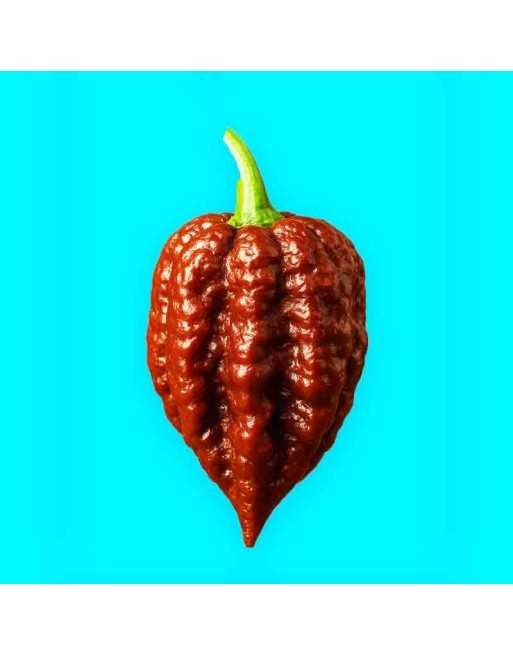
The Beast, Carolina Red Reaper & Chocolate Nagabrain, Super Hot Pepper.
Extremely hot and gnarly pods; excellent for sauces and seasonings.
Changes from green to red when ready for harvest.
A packet contains 5 seeds.
Warning: Handling this pepper requires extreme caution. Wear hand, eye, and breathing protection.
Heat Level: Mind-Blowing.
Scoville: 2,000,000 or more.
![Armageddon F1, Hybrid, Super-Hot Pepper Seeds, Cousin of Carolina Reaper, British Pepper - [ Shop Canadian Seeds Online ] - Pep](https://www.seed2go.ca/7689-home_default/armageddon-f1-hybrid-super-hot-pepper-seeds-cousin-of-carolina-reaper.jpg)
The Armageddon chili pepper is a British-bred hybrid chili pepper. It was developed by Tozer Seeds and first grown by Salvatore Genovese in England. The Armageddon pepper was introduced to the UK market in 2019.
The Armageddon pepper is a super-hot chili pepper that measures 1.3 million Scoville Heat Units (SHU).
It is the first British-bred chili to come out of a chili breeding program.
The Armageddon pepper is similar to the Carolina Reaper, which is the hottest chili, measuring 1.5 million SHU.
The Armageddon pepper is shaped like a fat, squatty lantern and ripens to a bright red.
The Armageddon pepper has a fruity and citrusy flavor.
| Type | Peppers |
| Family | Nightshade Family |
| Temperature Soil | 65-80F |
| Temperature Daytime | 70-90F |
| Temperature Evening | 60+F |
| Lighting | Full Sun, 6-8 Hours/Day |
| Water | Heavy, 6 Gallons/Day |
| Maturity | Moderate, 65-85 Days Harvest |
| PH Neutral | 5.5-7.0 |
| Zones | 4A-11B |
| Plant Placement | 6 Plants, 3 Row |
The 7 Pot pepper varieties are among the hottest chilies in the world, originally from Trinidad and known for their intense heat and fruity undertones. The name “7 Pot” comes from the idea that one pepper can heat seven pots of stew.
7 Pot Red
Bright red, deeply wrinkled pods with a classic superhot look. It delivers a scorching, immediate heat followed by a slightly smoky, fruity flavor.
SHU: ~800,000 to 1,200,000+
7 Pot Peach
Soft peach-colored pods with a smoother, slightly citrusy sweetness. The heat builds a bit slower but still reaches extreme levels.
SHU: ~800,000 to 1,000,000+
7 Pot Yellow
Vibrant yellow pods with a glossy, bumpy surface. Known for a brighter, more tropical fruit flavor with a sharp, lingering burn.
SHU: ~800,000 to 1,200,000+
All three varieties belong to the species Capsicum chinense and are prized by chili enthusiasts for making hot sauces, powders, and extreme heat culinary creations.
| Type | Pepper |
| Family | Nightshade Family |
| Temperature Soil | 65-80F |
| Temperature Daytime | 70-90F |
| Temperature Evening | 60+F |
| Lighting | Light - Full 6-8 Hours/Day |
| Water | Heavy; 6 gallons/day |
| Maturity | 65-80 Days to Harvest |
| PH Neutral | 5.5-7.0 |
| Zones | 4a-11b |
| Plant Placement | 6 Plants / 3 Row |