









![Thai Eggplant Seeds, Thai, Indian and Vietnamese Eggplant - [ Seed2Go.ca ] - [Seed Packets] - Eggplant -](https://www.seed2go.ca/8139-home_default/thai-eggplant-seeds-thai-indian-and-vietnamese-eggplant.jpg "Thai Eggplant Seeds, Thai, Indian and Vietnamese Eggplant - [ Seed2Go.ca ] - [Seed Packets] - Eggplant -")
Reference: PQ1-VG-PQ1-TRO

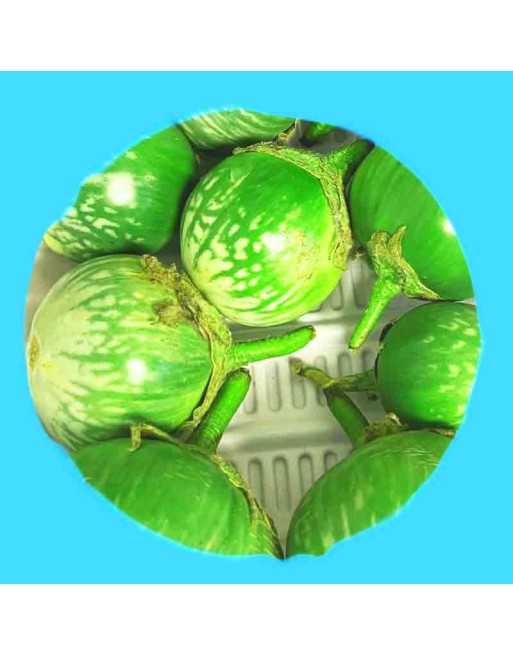
Petch Siam eggplant is a small, round, Thai eggplant with green skin and distinct dark green stripes, often called the "Diamond of Thailand" (Petch Siam), harvested when about 2 inches for a mild, slightly bitter taste and firm texture that absorbs flavors well in curries and stir-fries, growing on compact, productive plants.
Shape/Size: Small, round, about 1.5-2.5 inches in diameter.
Color: Pale green with darker green stripes, resembling a Kermit eggplant.
Texture: Firm flesh that holds up well in cooking.
Taste: Mildly sweet with subtle bitterness, taking on the flavors of spices like chili, basil, and soy sauce.
Plant: Compact and productive, producing many fruits.
Maturity: Early to mature, around 50-55 days from transplant.
Harvest: Best picked small (ping pong ball size) for optimal flavor; overripe when seeds turn brown.
A staple in Thai, Indian, and Vietnamese cuisine.
Excellent for curries (especially with coconut milk), stir-fries, and dips like baba ganoush.
Eggplants are a unique fruit that grow best in full sun and hot weather. Like other members of the Nightshade family, eggplants should not be planted until all danger of frost has passed, and daytime temperatures are consistently warm. Be certain to use the black side of the mulch covers to speed soil warming and early growth. These globe-like fruits tend to produce very well in containers, especially if overnight temperatures are warm. If a cold spell is expected, use a frost cover to protect plants, or bring them indoors. Check water levels daily, since eggplants are heavy drinkers, and fruit may become bitter of they do not receive adequate water. Flea beetles are the most common pest, leaving tiny holes all over the plants' large leaves. When harvesting, be sure to use pruners, since the stems will not release the fruit without destroying the plant.
COMMON PESTS: Aphids, Flea Beetles, Spider Mites, Tomato Hornworms, Colorado Potato Beetles
SUSCEPTIBLE TO: Downy Mildew, Powdery Mildew
Petch Siam eggplant is a small, round, Thai eggplant with green skin and distinct dark green stripes, often called the "Diamond of Thailand" (Petch Siam), harvested when about 2 inches for a mild, slightly bitter taste and firm texture that absorbs flavors well in curries and stir-fries, growing on compact, productive plants.
Shape/Size: Small, round, about 1.5-2.5 inches in diameter.
Color: Pale green with darker green stripes, resembling a Kermit eggplant.
Texture: Firm flesh that holds up well in cooking.
Taste: Mildly sweet with subtle bitterness, taking on the flavors of spices like chili, basil, and soy sauce.
Plant: Compact and productive, producing many fruits.
Maturity: Early to mature, around 50-55 days from transplant.
Harvest: Best picked small (ping pong ball size) for optimal flavor; overripe when seeds turn brown.
A staple in Thai, Indian, and Vietnamese cuisine.
Excellent for curries (especially with coconut milk), stir-fries, and dips like baba ganoush.