







- On sale!
![Japanese Carrot, Heirloom, Dark Red Carrot Seeds - [ Shop Canadian Seeds Online ] - Carrot -](https://www.seed2go.ca/8434-large_default/japanese-carrot-heirloom-dark-red-carrot-seeds.jpg "Japanese Carrot, Heirloom, Dark Red Carrot Seeds - [ Shop Canadian Seeds Online ] - Carrot -")



![Japanese Carrot, Heirloom, Dark Red Carrot Seeds - [ Shop Canadian Seeds Online ] - Carrot -](https://www.seed2go.ca/8434-home_default/japanese-carrot-heirloom-dark-red-carrot-seeds.jpg "Japanese Carrot, Heirloom, Dark Red Carrot Seeds - [ Shop Canadian Seeds Online ] - Carrot -")
![Japanese Carrot, Heirloom, Dark Red Carrot Seeds - [ Shop Canadian Seeds Online ] - Carrot -](https://www.seed2go.ca/8126-home_default/japanese-carrot-heirloom-dark-red-carrot-seeds.jpg "Japanese Carrot, Heirloom, Dark Red Carrot Seeds - [ Shop Canadian Seeds Online ] - Carrot -")
Reference: H5-VC-JAPC

Japanese carrots, are heirloom varieties known for their deep scarlet color, long, slender shape, and exceptional sweetness with caramel notes, often harvested in cool weather, offering rich nutrients and a tender, crisp texture ideal for raw, cooked, or juiced uses. They thrive in loose, well-draining soil and are highly valued as specialty vegetables (dento yasai) in Japanese cuisine.
Color & Appearance: Deep, vibrant scarlet red skin and flesh.
Shape: Long, tapered, and cylindrical, sometimes growing quite large.
Flavor: Exceptionally sweet, often with a distinct caramel undertone and pleasant aftertaste.
Texture: Smooth, tender, and crisp.
Nutrients: Rich in lycopene, potassium, fiber, calcium, and Vitamins C & E.
Popular Varieties:
A classic heirloom, known for intense sweetness and deep color when young. A popular, high-performing variety with a crisp, sweet taste, great for juicing and storage. A legendary, very long variety that can grow significantly large, drawing deep nutrients from the soil.
Excellent for salads, stir-fries, steaming, boiling, and tempura.
High water content makes them great for juicing.
Used in traditional Japanese dishes and even carved for New Year celebrations.
| Type | Carrots |
| Family | Parsley Family |
| Temperature Soil | 50-75F |
| Temperature Daytime | 60-65F |
| Temperature Evening | 45+F |
| Lighting | Full Sun, 6-8 Hours/Day |
| Water | Heavy, 6 Gallons/Week |
| Maturity | Moderate, 65-85 Days Harvest |
| PH Neutral | 5.5-7.0 |
| Zones | 4A-10B |
| Plant Placement | 20 Plants, 4 Per Row |
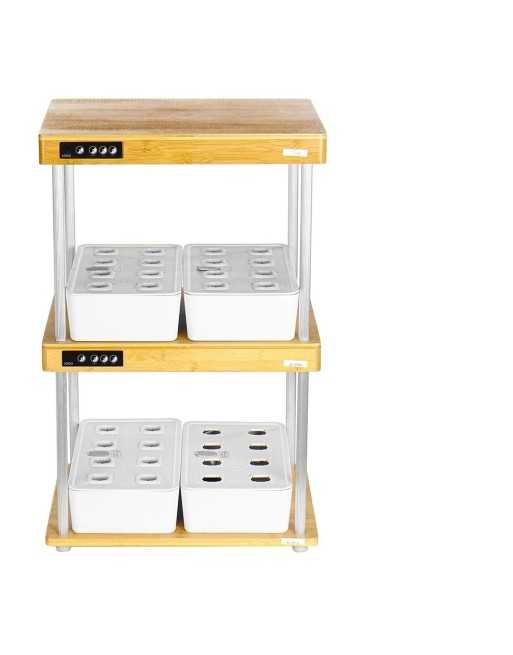
With some careful planning and attention, carrots are a snap to grow. These Vitamin A-rich veggies require a fertilizer that is low in nitrogen, and high in phosphorus. They do best when planted from seed rather than transplants, and thinning is imperative to prevent twisted or crooked roots. Carrots grow very well in peat-based growing media; do not require a heavy amount of water, but perform well in consistently moist soils--which make them ideal for growing in the gardening system. You're more likely to find four-footed critters rather than buggy pests around this crop--deer, rabbits, and woodchucks can all destroy this delectable crop. Once harvested, carrots can be stored for more than a month in the refridgerator. Freezing and canning are also great ways to preserve this sweet harvest for a later consumption.
COMMON PESTS: Aphids, Flea Beetles, Leaf Hoppers, Carrot Rust Flies
SUSCEPTIBLE TO: Damping Off, Downy Mildew, Powdery mildew, Blight, Yellow Disease, Black Rot
Japanese carrots, are heirloom varieties known for their deep scarlet color, long, slender shape, and exceptional sweetness with caramel notes, often harvested in cool weather, offering rich nutrients and a tender, crisp texture ideal for raw, cooked, or juiced uses. They thrive in loose, well-draining soil and are highly valued as specialty vegetables (dento yasai) in Japanese cuisine.
Color & Appearance: Deep, vibrant scarlet red skin and flesh.
Shape: Long, tapered, and cylindrical, sometimes growing quite large.
Flavor: Exceptionally sweet, often with a distinct caramel undertone and pleasant aftertaste.
Texture: Smooth, tender, and crisp.
Nutrients: Rich in lycopene, potassium, fiber, calcium, and Vitamins C & E.
Popular Varieties:
A classic heirloom, known for intense sweetness and deep color when young. A popular, high-performing variety with a crisp, sweet taste, great for juicing and storage. A legendary, very long variety that can grow significantly large, drawing deep nutrients from the soil.
Excellent for salads, stir-fries, steaming, boiling, and tempura.
High water content makes them great for juicing.
Used in traditional Japanese dishes and even carved for New Year celebrations.
| Type | Carrots |
| Family | Parsley Family |
| Temperature Soil | 50-75F |
| Temperature Daytime | 60-65F |
| Temperature Evening | 45+F |
| Lighting | Full Sun, 6-8 Hours/Day |
| Water | Heavy, 6 Gallons/Week |
| Maturity | Moderate, 65-85 Days Harvest |
| PH Neutral | 5.5-7.0 |
| Zones | 4A-10B |
| Plant Placement | 20 Plants, 4 Per Row |