









- -$0.16

*Existing Repeat Customers Discounted Too!


![Chantenay Red Core Carrot, Red-Core Colored Carrot Seeds - [ Shop Canadian Seeds Online ] - Carrot -](https://www.seed2go.ca/5105-home_default/chantenay-red-core-carrot-red-core-colored-carrot-seeds.jpg "Chantenay Red Core Carrot, Red-Core Colored Carrot Seeds - [ Shop Canadian Seeds Online ] - Carrot -")
![Chantenay Red Core Carrot, Red-Core Colored Carrot Seeds - [ Shop Canadian Seeds Online ] - Carrot -](https://www.seed2go.ca/4146-home_default/chantenay-red-core-carrot-red-core-colored-carrot-seeds.jpg "Chantenay Red Core Carrot, Red-Core Colored Carrot Seeds - [ Shop Canadian Seeds Online ] - Carrot -")
![Chantenay Red Core Carrot, Red-Core Colored Carrot Seeds - [ Shop Canadian Seeds Online ] - Carrot -](https://www.seed2go.ca/419-home_default/chantenay-red-core-carrot-red-core-colored-carrot-seeds.jpg "Chantenay Red Core Carrot, Red-Core Colored Carrot Seeds - [ Shop Canadian Seeds Online ] - Carrot -")
![Chantenay Red Core Carrot, Red-Core Colored Carrot Seeds - [ Shop Canadian Seeds Online ] - Carrot -](https://www.seed2go.ca/2169-home_default/chantenay-red-core-carrot-red-core-colored-carrot-seeds.jpg "Chantenay Red Core Carrot, Red-Core Colored Carrot Seeds - [ Shop Canadian Seeds Online ] - Carrot -")
Reference: ZA1-VG-CRCC

The ultimate carrot for winter cultivation and storage. Wide shoulders, dense flesh, and solid carrot flavor make it a preferred variety for processing and great for bulk and/or wholesale as the poundage adds up quickly. Grows well in heavy soil, strong tops and wedge shape make for easy harvest.
| Type | Carrots |
| Family | Parsley Family |
| Temperature Soil | 50-75F |
| Temperature Daytime | 60-65F |
| Temperature Evening | 45+F |
| Lighting | Full Sun, 6-8 Hours/Day |
| Water | Heavy, 6 Gallons/Week |
| Maturity | Moderate, 65-85 Days Harvest |
| PH Neutral | 5.5-7.0 |
| Zones | 4A-10B |
| Plant Placement | 20 Plants, 4 Per Row |
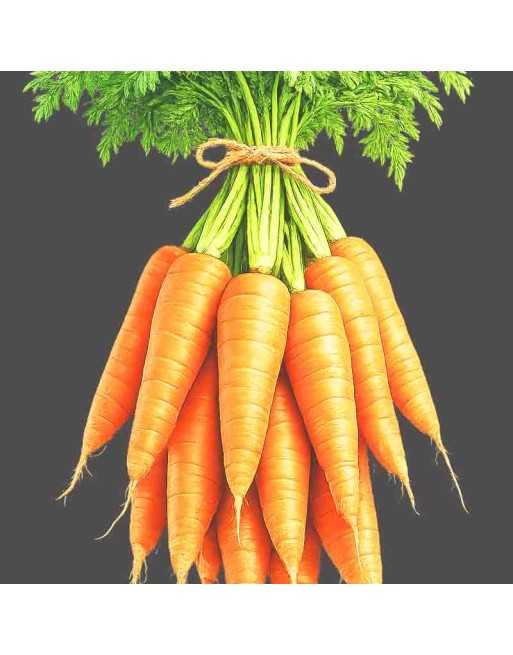
Chantenay carrots are short carrots with light orange skin and orange-red colored cores. Chantenay carrots are grown for canned and processed carrots because of their high yield. The carrots can be eaten fresh, frozen, or canned. Chantenay carrots can be eaten raw or cooked, with their taste usually described as sweet and crisp. However, they may become coarse and tough when grown past maturity, specifically in the heat of summer. Like all carrots, Chantenay carrots are high in carotene and fiber.
There are two main types of Chantenay carrot seeds available to gardeners, Red-cored Chantenay or Royal Chantenay.
Red-cored Chantenay carrots have a redder core and blunt tip.
Royal Chantenay carrots have an orange-red core and a tapered tip.
With some careful planning and attention, carrots are a snap to grow. These Vitamin A-rich veggies require a fertilizer that is low in nitrogen, and high in phosphorus. They do best when planted from seed rather than transplants, and thinning is imperative to prevent twisted or crooked roots. Carrots grow very well in peat-based growing media; do not require a heavy amount of water, but perform well in consistently moist soils--which make them ideal for growing in the gardening system. You're more likely to find four-footed critters rather than buggy pests around this crop--deer, rabbits, and woodchucks can all destroy this delectable crop. Once harvested, carrots can be stored for more than a month in the refridgerator. Freezing and canning are also great ways to preserve this sweet harvest for a later consumption.
COMMON PESTS: Aphids, Flea Beetles, Leaf Hoppers, Carrot Rust Flies
SUSCEPTIBLE TO: Damping Off, Downy Mildew, Powdery mildew, Blight, Yellow Disease, Black Rot
The ultimate carrot for winter cultivation and storage. Wide shoulders, dense flesh, and solid carrot flavor make it a preferred variety for processing and great for bulk and/or wholesale as the poundage adds up quickly. Grows well in heavy soil, strong tops and wedge shape make for easy harvest.
| Type | Carrots |
| Family | Parsley Family |
| Temperature Soil | 50-75F |
| Temperature Daytime | 60-65F |
| Temperature Evening | 45+F |
| Lighting | Full Sun, 6-8 Hours/Day |
| Water | Heavy, 6 Gallons/Week |
| Maturity | Moderate, 65-85 Days Harvest |
| PH Neutral | 5.5-7.0 |
| Zones | 4A-10B |
| Plant Placement | 20 Plants, 4 Per Row |
Chantenay carrots are short carrots with light orange skin and orange-red colored cores. Chantenay carrots are grown for canned and processed carrots because of their high yield. The carrots can be eaten fresh, frozen, or canned. Chantenay carrots can be eaten raw or cooked, with their taste usually described as sweet and crisp. However, they may become coarse and tough when grown past maturity, specifically in the heat of summer. Like all carrots, Chantenay carrots are high in carotene and fiber.
There are two main types of Chantenay carrot seeds available to gardeners, Red-cored Chantenay or Royal Chantenay.
Red-cored Chantenay carrots have a redder core and blunt tip.
Royal Chantenay carrots have an orange-red core and a tapered tip.