



Quick order form

You already know the products you want to order ?

Click on the button below to access our quick order form and save time.

Access quick order form

Oriental Seed Packets

Oriental Seed Packets

Subcategories

There are 47 products.

Showing 11-20 of 47 item(s)

Browse catalog by type and build your cart by clicking add to cart. Once clicked and spinner starts, the item is automatically in your shopping cart. When ready to checkout, view your cart and select "Place My Order."


10% of all profits are donated to goodwill projects at our expense.

Licorice Root Herb, Plant, Annual, European & Asian

Common Names: licorice root, licorice, liquorice, sweet root, gan cao, gan zao, Chinese licorice

Latin Names: Glycyrrhiza glabra, Glycyrrhiza uralensis, Glycyrrhiza inflata

Background

Licorice root is cultivated throughout Europe, Asia, and the Middle East. It is used as a flavoring in candy, other foods, beverages, and tobacco products.

Licorice root has a long history of use, going back to ancient Assyrian, Egyptian, Chinese, and Indian cultures. It was used traditionally for treating a variety of conditions, including lung, liver, circulatory, and kidney diseases.

Today, licorice root is promoted as a dietary supplement for conditions such as digestive problems, menopausal symptoms, cough, and bacterial and viral infections. Licorice gargles or lozenges have been used to try to prevent or reduce the sore throat that sometimes occurs after surgery. Licorice is also an ingredient in some products for topical use (application to the skin).

Perennial (zones 7-10)

14-20 days

Well-drained

Part shade to full sun

12-36" apart

Licorice has long been appreciated as a flavoring in confections, liqueurs and other creations. It's use as a flavorful tea goes back even farther. Licorice tea does not taste exactly like the black licorice sticks you might remember from childhood. That's because most licorice candy is usually flavored with anise.

★★★★★ Preorder:5-9 Days
Price $2.49

Japanese Parsley Seeds, Mitsuba East Asian Wild Parsley, San Ye Qin

Cryptotaenia japonica, also called East Asian wildparsley, Japanese cryptotaenia, Japanese honewort, white chervil mitsuba, Japanese wild parsley, stone parsley, honeywort, san ip, trefoil, and san ye qin is a plant species native to Japan, Korea, and China

Cryptotaenia japonica is raised as a seasoning (similar to angelica). Like parsley, the flavor is clean and refreshing with a slightly bitter taste which some describe as celery-like. The sprouts are used in salads and soup.[citation needed]

Cryptotaenia japonica is raised as a seasoning (similar to angelica). Like parsley, the flavor is clean and refreshing with a slightly bitter taste which some describe as celery-like. The sprouts are used in salads and soup. In Japan, it is commonly used as a garnish in soups or atop entrees or as a sushi ingredient.

★★★★★ In Stock
Price $2.49
Mizuna Lettuce, Dark Green Dandelion, Japanese/Asian
  • On sale!

Mizuna Lettuce, Dark Green Dandelion, Japanese/Asian

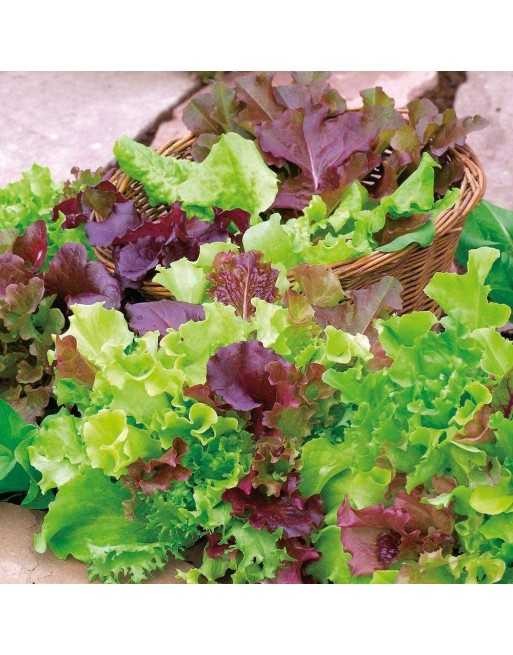
A very popular addition to gourmet salad mixes. Serrated green leaves offer interesting texture to blend with other varieties of lettuce. The younger the growth, the more mild the flavour. As a baby green 17 to 21 days to harvest. Full grown, 40 Days to harvest!

Spicy mustard flavor adds zing to salads and is a frequent addition to spring mix. Narrow leaves are dark green and serrated. Excellent for baby vegetable and salad mixes. 

Type Salad Greens
Family Cabbage Family
Temperature Soil 55-75F
Temperature Daytime 50-65F
Temperature Evening 40F+
Lighting Partial / Full, 4-6 Hours/Day
Water Light,6 Gallons/Week
Maturity Short, 30-55 Days Harvest
PH Neutral 6.5-7.2
Zones 1A-9B
Plant Placement 4 Plants, 4 Per Row


★★★★★ In Stock
Price $2.49
Oriental Salad Leaf Lettuce Mix, Easy Sow, Rocket, Mizuna, Tat Soi, Bulls Blood - [ Shop Canadian Seeds Online ]  - Salad/Mesclu
  • On sale!
  • -$0.16

Oriental Salad Leaf Lettuce Mix, Easy Sow, Rocket, Mizuna, Tat Soi, Bulls Blood

Oriental Salad Mix:Rocket, Mizuna, Tat Soi, Bulls Blood
These are considered oriental gourmet mix of lettuces. Plants will continue to grow after cutting. Excellent yielder. Very popular second-early variety well suited to summer grouping of plants.
这些被认为是生菜的东方美食组合。切割后植物会继续生长。优秀的产量。非常受欢迎的二早品种,非常适合夏季植物分组。

Type Salad Greens
Family Cabbage Family
Temperature Soil 55-75F
Temperature Daytime 50-65F
Temperature Evening 40F+
Lighting Partial / Full, 4-6 Hours/Day
Water Light,6 Gallons/Week
Maturity Short, 30-55 Days Harvest
PH Neutral 6.5-7.2
Zones 1A-9B
Plant Placement 4 Plants, 4 Per Row


★★★★★ In Stock
Regular price $2.65 Price $2.49
Korean Melon Chamoe (참외) Seeds, Oriental Melon - [ Shop Canadian Seeds Online ]  - Melon -
  • On sale!

Korean Melon Chamoe (참외) Seeds, Oriental Melon

 참외(Cucumis melo ssp. agrestis var. makuwa)는 박과의 한해살이 덩굴식물로, 멜론(Cucumis melo)의 일종이다. 1차 원산지는 아프리카 사하라 남부, 2차 원산지는 인도, 러시아, 대한민국으로 알려져 있다.

The melon (Cucumis melo ssp. agrestis var. makuwa) is an annual vine of the Cucurbitaceae family, a type of melon (Cucumis melo). Its primary origin is believed to be sub-Saharan Africa, with secondary origins in India, Russia, and South Korea.

Korean melon (Chamoe, 참외) has a subtly sweet, floral flavor with notes of honeydew, cucumber, and pear, and a firm, crisp, juicy texture similar to a crunchy apple or unripe peach. It's less intensely sweet than a cantaloupe and has a unique refreshing and slightly tangy quality.

Type Melon
Family Gourd Family
Temperature Soil 65-70F
Temperature Daytime 80-100F
Temperature Evening 50+F
Lighting Light, Full, 6-8 Hours / Day
Water Heavy, 3 Gal / Day
Maturity Long, 65-115 Days
PH Neutral Ph Neutral, 6-6.8
Zones 3A-11lb
Plant Placement 4 Plants, 2 Per Row
★★★★★ In Stock
Price $2.49

Wansoy Asian Cilantro Coriander, Asian Cilantro, Herb Seeds

Variety of the coriander plant (Coriandrum sativum) known for its compact size, suitable for container growing.

The herb is a popular ingredient in many Asian and Latin American dishes, adding a distinct, fresh flavor.  

Uses: The leaves can be used fresh in salads or cooked in dishes like stir-fries. If the plant is allowed to bolt, its seeds can be harvested as a spice. 

Wansoy is the Filipino name for cilantro, also known as coriander leaves, a vibrant green herb recognized for its delicate, lacy leaves and slender stems. It has an intensely fresh, pungent aroma and a bright, citrusy flavor with subtle peppery notes, though some people perceive a soapy taste due to genetic sensitivity. A staple in many global cuisines—including Latin American, Thai, Vietnamese, and Indian cooking—wansoy is commonly used to add a zesty, refreshing finish to salsas, curries, soups, salads, and noodle dishes. Both the leaves and tender stems are used for their fresh flavor, while the plant’s seeds, known as coriander, provide a warm, mildly spicy taste. Often compared in appearance to flat-leaf parsley but with a softer texture, wansoy is also widely known as cilantro, coriander, or Chinese parsley.

Type

Herbs
Family Family Varies
Temperature Soil 50-60F
Temperature Daytime 50-85F
Temperature Evening 45F
Lighting Partial, 2-4 Hours/Day
Water Light, 6 Gallons/Week
Maturity 65-100 Days Harvest
PH Neutral 5.5-8.0
Zones 2A-10B
Plant Placement 3 Plants, 3 Rows
★★★★★ In Stock
Price $2.49

Yellow Chinese Chives, Chive Seeds, Asian Chives

Chinese chives  are a perennial herb with flat, grass-like green leaves and a mild garlic-onion flavor, distinct from round onion chives; they form clumps, produce edible white flowers, and are used in Asian cooking for stir-fries, dumplings, and eggs, adding savory flavor and texture. They are heartier than regular chives, with a strong aroma when crushed, and are a staple in many Asian cuisines. 

Leaves: Flat, long, and pale green, unlike the hollow, round leaves of common chives, with a strong garlic smell when crushed.

Plant: Forms clumps of foliage, reaching 10-20 inches tall, with edible white flowers on stalks.

Hardiness: A perennial that dies back in winter in colder climates but stays green in warmer zones. 

Taste: Stronger, garlicky flavor than onion chives, but milder than raw garlic.

Culinary Uses: Used in dumplings, pancakes, stir-fries, egg dishes, soups, and salads; added at the end of cooking to preserve flavor.

Edible Parts: Leaves, flowers, and even seeds are edible. 

Cultivated in Asia for over 3,000 years for culinary, medicinal, and ceremonial uses. 

Yellow Chives: A variety with a milder taste and more delicate texture than standard garlic chives. 


Type

Herbs
Family Family Varies
Temperature Soil 50-60F
Temperature Daytime 50-85F
Temperature Evening 45F
Lighting Partial, 2-4 Hours/Day
Water Light, 6 Gallons/Week
Maturity 65-100 Days Harvest
PH Neutral 5.5-8.0
Zones 2A-10B
Plant Placement 3 Plants, 3 Rows
★★★★★ In Stock
Price $2.49

Japanese Ishikura Welsh Bunching Onion Seeds, Green Onions

Welsh Onion

Ishikura onion is a popular, fast-growing Japanese bunching onion (Allium fistulosum) known for its long, thick white stalks and mild flavor, typically reaching up to 2 feet in height without forming bulbs. It is highly versatile, ideal for stir-fries, soups, and salads, and can be harvested at various stages from pencil-thin to thick, carrot-sized stalks. It is a very hardy, cold-tolerant, and versatile variety suitable for both spring and autumn sowing, making it excellent for year-round harvesting. 

Key Characteristics and Growing Tips:

Harvesting: They do not form bulbs, providing a continuous harvest of crisp, tender, white stems.

Hardiness: Highly cold-tolerant, allowing for late-season or winter harvesting.

Cultivation: Thrives in full sun to partial shade in well-drained soil.

Spacing: Requires 4–6 inches of space.

Planting: Direct sow in early spring or in autumn for spring harvest.

Uses: Excellent for stir-fries, salads, and soups. 

Type Onion
Family Allium Family
Temperature Soil 40F+
Temperature Daytime 55-75F
Temperature Evening 45+F
Lighting Full, 6-8 Hous Per Day
Water Steady, 6 Gallons / Week
Maturity Long, 80-120 Days Harvest
PH Neutral 5.5-6.5
Zones 3A-9B
Plant Placement 12 Plants, 3 Per Row


★★★★★ In Stock
Price $2.49
Korean Radish, Green Top F1, Green Shoulder Radish Seeds - [ Seed2Go.ca ] - [Seed Packets] - Radish -
  • -$0.16

Korean Radish, Green Top F1, Green Shoulder Radish Seeds

The Korean radish is similar to the daikon radish but is shorter, rounder and usually has a green shoulder. 

Green Shoulder Spring F1: Korean green shoulder type. 60~70 days. 7~8" long,3~4" in diameter. Resistant to Club Root. Slow bolting. Small leaves and good for dense planting. Upright and uniform. Firm flesh is tender and sweet. Can be planted in spring, summer and fall.

Is Korean radish and daikon the same?

Compared to a Western radish, a Korean radish is generally much longer and bigger. ... Though similar in taste and look to daikon (Japanese radish), mu is generally shorter and rounder than daikon. It's also slightly green toward the top, whereas daikon is white throughout. 

Type Radish
Family Cabbage Family
Temperature Soil 40-45F
Temperature Daytime 50-65F
Temperature Evening 40+F
Lighting Full, 6-8 Hous Per Day
Water Light, 3 Gallons / Week
Maturity Short, 20-60 Days
PH Neutral 5.8-6.8
Zones 2A-10B
Plant Placement 20 Plants, 4 Per Row


★★★★★ In Stock
Regular price $2.65 Price $2.49