





Quick order form

You already know the products you want to order ?

Click on the button below to access our quick order form and save time.

Access quick order form

Italian Vegetable Seeds

Italian Vegetable Seeds

Subcategories

There are 188 products.

Showing 81-90 of 188 item(s)

Browse catalog by type and build your cart by clicking add to cart. Once clicked and spinner starts, the item is automatically in your shopping cart. When ready to checkout, view your cart and select "Place My Order."


10% of all profits are donated to goodwill projects at our expense.
Genovese Basil Herb, Italian, Herb Seeds - [ Seed2Go.ca ] - [Seed Packets] - Herb Seeds -
  • -$0.16

Genovese Basil Herb, Italian, Herb Seeds

Genovese basil, an Italian heirloom variety, is prized for its large, shiny, dark green leaves, a sweet, slightly spicy flavor, and strong aroma, making it a favorite for pesto and other culinary uses. 

Genovese basil is a traditional Italian basil variety, particularly famous for its use in making pesto, and is grown in the Genoa area of Italy. 

It features large, shiny, dark green leaves that are slightly crinkled and can grow up to 3 inches long. 

The leaves have a sweet, slightly spicy flavor with a strong, pleasant aroma, making it a versatile herb for various dishes. 

Genovese basil is widely used in pesto, caprese salads, and other dishes that require large, fresh basil leaves. 

Type Herb
Family Ocimum basilicum
Temperature Soil 50-65F
Temperature Daytime 60-80F
Temperature Evening 55F
Lighting Full Sun, 6-8 Hours
Water Well Drained
Maturity Long, 80-90 Days until Harvest
PH Neutral Slightly Acidic to Neutral
Zones 5a-10b
Plant Placement 10-12 Inches Apart, 1 1/4" Deep
★★★★★ In Stock
Regular price $2.65 Price $2.49
Red Leaf Boston Lettuce, Limestone Lettuce, Butterhead Lettuce - [ Shop Canadian Seeds Online ]  - Lettuce -
  • -$0.16

Red Leaf Boston Lettuce, Limestone Lettuce, Butterhead Lettuce

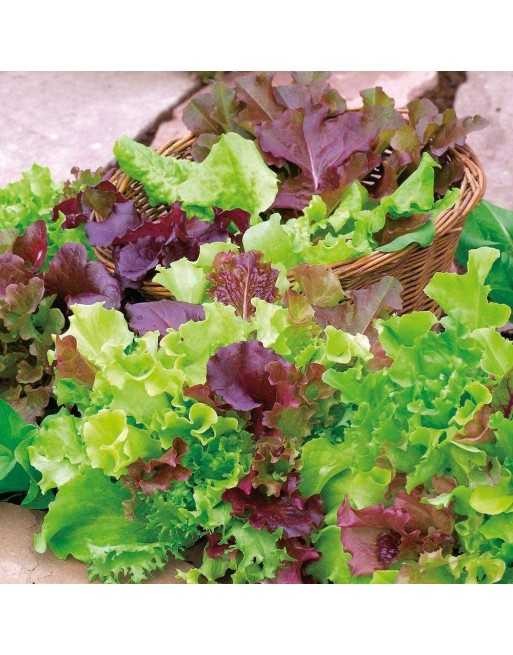
Red Boston lettuce is a medium to large varietal and round in shape with loose, wavy, cupped leaves and an open center, similar in appearance to a rose. The broad, soft, outer leaves are thick and frilled at the edges with swirls of red, purple, and burgundy, and these leaves encompass more tightly bound, yellow-green leaves in the center of the head. Together they form a rosette pattern of leaves that are wide and have a smooth, silky consistency with a uniform crunch. Red Boston lettuce is tender and crisp with a nutty, mild, and sweet flavor.
Red Boston lettuce is best suited for both raw and cooked applications such as braising or boiling. Predominately used as the principle ingredient in salad, its textures and subtle flavors are perfect for savory and bold, or bright, fruity companion ingredients. Red Boston lettuce is commonly layered in sandwiches or used as a wrap for tuna or chicken. In addition to fresh preparations, Red Boston lettuce can be cooked and transformed into an earthy and sultry ingredient when slowly braised or added to simmering soup, achieving a level of caramelization when paired with the right ingredients such as butter, rich meats, and chicken stock. It can also be used in stir-fries or mixed into cooked peas. Red Boston lettuce pairs well with bright herbs including dill, basil, and mint, lemon juice, mustard, vinaigrettes, citrus-based dressings, blue cheese, feta cheese, cottage cheese, ricotta cheese, bacon, anchovies, shallots, leeks, nuts such as pistachios, walnuts, hazelnuts, and Marcona almonds, apples, pears, seedless grapes, persimmons, and sliced grapefruit. It will keep 3-4 days in a loosely closed container when stored in the crisper drawer of the refrigerator.
 
Type Lettuce
Family Daisy Family
Temperature Soil 40-50F
Temperature Daytime 50-65F
Temperature Evening 40F+
Lighting Partial / Light, 2-4 Hours/Day
Water Light, 3 Gallons/Week
Maturity Moderate, 60-70 Days Harvest
PH Neutral 7.0-8.0
Zones 4A-9B
Plant Placement 8 Plants, 4 Per Row

Packet: 9-10 grams of seed


★★★★★ In Stock
Regular price $2.65 Price $2.49
Broccoli of Calabria, Ramoso Calabrese, Cavolo Broccolo, Broccoli Seeds - [ Shop Canadian Seeds Online ]  - Broccoli -
  • -$0.16

Broccoli of Calabria, Ramoso Calabrese, Cavolo Broccolo, Broccoli Seeds

Cultural heritage. From 1880. Dark green. Very tasty. Gives many side shoots and rich harvest throughout the country. Good for freezing.

Cultivation from seed:

Pre-cultivated indoors March-April. Cover the seed with clear plastic provided with air holes and place at about 20 degrees, bright and cooler after germination. Planted after softening when the risk of frost is over. Can also be sown directly in the open air when the soil has been heated to at least 15 degrees. Avoid dehydration. Cut off the flower heads early for more side shoots. Non-woven fabric or cabbage net protects against pests.

Type Broccoli
Family Cabbage Family
Temperature Soil 40F
Temperature Daytime 60-65F
Temperature Evening 60+F
Lighting Full, 6-8 Hours Per Day
Water Steady: 6 Gallons / Week
Maturity Moderate: 70-75 Days Harvest
PH Neutral 6.0-7.0
Zones 3A-10B
Plant Placement 6 Plants, 3 Per Row


★★★★★ In Stock
Regular price $2.65 Price $2.49
Sicilian Snake Cucuzzi, Italian Slender Long Zucchini, Serpent of Sicily, Edible Gourd Seeds - [ Shop Canadian Seeds Online ]  -
  • -$0.16

Sicilian Snake Cucuzzi, Italian Slender Long Zucchini, Serpent of Sicily, Edible Gourd Seeds

A favorite squash of Sicilians, cucuzza squash, meaning ‘super long squash,’ is gaining some popularity in North America. Never heard of cucuzza squash plants? 

Also known under a wide range of other names such as Zucchetta Cucuzzi, Serpent of Sicily, Italian Edible Gourd, Longissima, Bottle Gourd, Calabash, Suzza Melon, Zucca, Tasmania Bean, Guinea Bean, New Guinea Bean, White Flowered Gourd and Indian Squash, is a vine is an annual plant with hairy, shallow lobed leaves and white flowers (unlike squash which are always yellow flowered). The vines can run up to 25 feet in length.

Cucuzza is a summer squash in the botanical family of Lagenaria, which boasts a plethora of other varieties. This edible squash is related to the calabash, also known as water gourd or bird’s nest gourd. A vigorous squash, fruit is born from vines that can grow two feet (0.5 m.) a day. The fruits are straight, green gourds, occasionally with a minor curve to them. The skin is dark green and medium hard. The fruit itself can grow 10 inches (25 cm.) per day and will be 18 inches to 2 feet (45-60 cm.) long. The squash is usually peeled and the seeds removed from the larger fruit. The squash can be cooked just like any other summer squash – grilled, stewed, fried, stuffed, or roasted. Intrigued? I bet you’re wondering how to grow cucuzza squash now.

Type Gourds
Family Gourd Family
Temperature Soil 65-70F
Temperature Daytime 50-90F
Temperature Evening 55+F
Lighting Full, 6-8 Hours Per Day
Water Steady: 6 Gallons / Day
Maturity Long, 90-120 Days Harvest
PH Neutral 6.0-7.0
Zones 3A-9B
Plant Placement 4 Plants, 2 Per Row


★★★★★ In Stock
Regular price $2.65 Price $2.49
French & Belgian Witloof Chicory, Endive Chicory, Witloof di Bruxelles Seeds - [ Shop Canadian Seeds Online ]  - Endive -
  • -$0.16

French & Belgian Witloof Chicory, Endive Chicory, Witloof di Bruxelles Seeds

Famous for the forced, blanched heads or ‘chicons’ that are loved by gourmets Chicory 'Brussels Witloof' is the traditional finely-textured variety used for forcing. It produces tightly packed high-quality leaves and is one of the finest tasting winter vegetables.
Witloof (meaning 'white leaf' in Flemish) has a delicious, tangy, unique flavour, very easy to grow, it needs to be blanched to obtain the characteristic pale yellow, but can be cut young for use without blanching.
Raw, cooked, baked, roasted, caramelised, stewed, sweet or savory, there are endless ways to enjoy Witloof chicory. It is served in most of central Europe as a hot dish, but also used occasionally in a salad. Use it raw for dipping, filling or chopped in salads. It can also be cooked, baked, roasted, caramelized, stewed, sweet or savory.
Origin:
Chicory describes a group of hardy annual or biennial cultivated plants developed from a common wild plant of Europe, western Asia, and Africa. Wild forms of endive grow in the same area as chicory, but extends farther to the east to India and beyond, including Siberia. The cultivated varieties are root chicory (Cichorium var. sativum) and salad chicory (Cichorium var. foliosum).
Chicory was introduced to England, Germany, Holland, and France in the 13th century. The French used it primarily for medicinal purposes to "comfort the weake and feeble stomack and to help gouty limbs and sore eyes".
 
Type Chicory
Family Asteraceae  Family
Temperature Soil 50-65F
Temperature Daytime 50-65F
Temperature Evening 40F+
Lighting Partial / Light, 4-6 Hours/Day
Water Light, 6 Gallons/Week
Maturity Light, 35-50 Days Harvest
PH Neutral 6.5-7.2
Zones 1A-9B
Plant Placement 4 Plants, 4 Per Row


★★★★★ In Stock
Regular price $2.65 Price $2.49
Italian Broccoletto Seeds, Rapini Marzatica, Sgaravatti Spring Rapini, Broccoli Raab, Broccoli Rabe, Cima di Rapa - [ Shop Canad
  • On sale!

Italian Broccoletto Seeds, Rapini Marzatica, Sgaravatti Spring Rapini, Broccoli Raab, Broccoli Rabe, Cima di Rapa

Late variety, very productive, also known as broccoli or top of turnip

It is a type of turnip whose inflorescences and the tender part of the stem with the leaves are used

The plants are cut 5-10 cm from the ground so that it can drive other numerous axillary jets from the base of the stem

Sowing: from September to the end of October in rows 30 cm apart

Harvest: about 120 days from sowing

★★★★★ In Stock
Price $2.49
Oxheart Tomato, Cuor Di Albenga, Heart of Beef from Italy, Tomato Seeds - [ Shop Canadian Seeds Online ]  - Tomato Seeds -
  • -$0.16

Oxheart Tomato, Cuor Di Albenga, Heart of Beef from Italy, Tomato Seeds

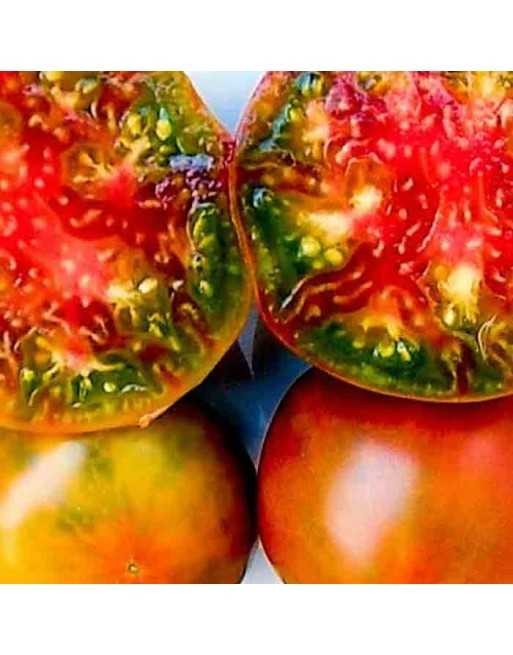
Cuor Di Albenga is an heirloom oxheart tomato from Albenga, Italy, known for its large, meaty, pleated, teardrop-shaped fruits that are typically red or orangey-red. It has a sweet and savory flavor that makes it excellent for both fresh use, such as in salads, and for cooking, especially roasting, sauces, and canning. These plants are indeterminate, vigorous, and productive. 

Origin: From the Ligurian coast town of Albenga in Northern Italy.

Shape: Large, pleated, teardrop or ox-heart shaped.

Size: Fruits are large, often weighing 10–16 ounces (about 200–300g).

Color: Ranges from pinkish to red or orangey-red.

Flesh: Meaty with few seeds and little juice, with a firm and sweet pulp.

Growth: Indeterminate, vigorous, and productive plants that require staking or caging. 

Fresh: Excellent sliced and eaten raw in salads, or used in Caprese salads.

Sauces: Ideal for homemade sauces, pasta dishes, and stews due to its rich, meaty flesh.

Roasting: Roasting brings out its savory richness.

Other: Also suitable for canning and making fresh juice. 

Type Tomato
Family Nightshade Family
Temperature Soil 70F
Temperature Daytime 70-85F
Temperature Evening 65+F
Lighting Light, Full, 6-8 Hours / Day
Water Heavy, 9 Gal / Day
Maturity Long, 65-100 Days
PH Neutral Ph Neutral, 5.5-6.8
Zones 2A-10b
Plant Placement 2 Plants, 2 Per Row


★★★★★ In Stock
Regular price $2.65 Price $2.49
Little Gem Lettuce Seeds, Heat Lettuce, Butterhead/Romaine Cross - [ Shop Canadian Seeds Online ]  - Lettuce -
  • On sale!

Little Gem Lettuce Seeds, Heat Lettuce, Butterhead/Romaine Cross

Lettuce seeds can be planted directly into the garden soil.

Sow the seeds directly into the garden soil beginning in early spring starting 2 weeks prior to the last frost-free date. 

Plant the tiny seeds 1/4" deep and later thin to 10" apart. Seeds can be planted every 3 weeks for a staggered harvest or once again in late summer for a fall harvest. Fall planting can occur 10 weeks before your average first frost date.

Build up a raised row of soil about 8" wide. Scatter the seeds in a line on top and then cover with 1/4” to 1/2" of soil. Keep the soil evenly moist. Lettuce seeds will germinate in 5-10 days depending on the soil temperature. Germination is slower in the cold weather of spring. 

Lettuce has shallow roots so gently mulch around it to deter weeds and retain soil moisture.

The ways to harvest lettuce include harvesting it as a baby green by picking individual young leaves, harvesting the outer leaves as needed and letting the plants grow, or by harvesting the entire head by slicing it off about an inch above the soil.

Each packet contains 500 Little Gem Lettuce seedsLactuca sativa. Annual. Open-pollinated, heirloom, Non-GMO. Harvest in 50 days. 

This packet plants a 60' row with 72 plants. 

Type Salad Greens
Family Cabbage Family
Temperature Soil 55-75F
Temperature Daytime 50-65F
Temperature Evening 40F+
Lighting Partial / Full, 4-6 Hours/Day
Water Light,6 Gallons/Week
Maturity Short, 30-55 Days Harvest
PH Neutral 6.5-7.2
Zones 1A-9B
Plant Placement 4 Plants, 4 Per Row

★★★★★ In Stock
Price $2.49
'Golden' Onion of Parma, Italy, Golden Yellow Onion Seeds - [ Shop Canadian Seeds Online ]  - Onion -
  • -$0.16

'Golden' Onion of Parma, Italy, Golden Yellow Onion Seeds

The 'golden' onion of Parma, Italy. A late maturing onion with golden upright top-shaped large bulbs. Excellent storage quality. Compares to any of the top yellow varieties for taste. The shape makes for great slicing. Long Day. Untreated seed.

Golden onions of Parma stand out for their refined simplicity, enclosed in a skin with a sophisticated colour. On the inside, however, it is extremely simple and genuine, so much so that it is appreciated worldwide. It is, in fact, an antique variety famous throughout Europe.

Golden onions of Parma are particularly resistant and easy to preserve. They are large and pyramid in shape and range from straw yellow to intense gold.

This variety takes a long time to develop. It is sown in mid-winter between December and February, but is not harvested until the summer, between mid-July and the end of August. One of the reasons that makes it so successful lies in its storage properties: golden onions of Parma can be perfectly preserved until well after the winter, especially if stored in a cellar or pantry, inside a basket covered with a sheet of newspaper, in a paper bag or cardboard box, where any chance of humidity that might cause the growth of micro-organisms is kept under control.

Which cooking methods bring the best out of the golden onion of Parma? Thanks to its intense taste, it is not very suitable to be consumed raw. On the contrary, its sweet taste can be best savoured in dishes that are cooked slowly, such as soups or braised meats. These qualities have earned it a place of honour on any table in Emilia, but also the Marche region – where it is popular in onion and tomato omelette – and in Umbria, the home of the “cipollata”, or onion stew. Even in simpler preparations, the golden onion of Parma will bowl you over with its sweet taste: try it baked, cut into slices and fried with breadcrumbs, served with anchovy fillets or a few slivers of hard cheese.

From a nutritional viewpoint, the golden onion of Parma is rich in vitamin C and calcium. It also has vermifuge, antiseptic and diuretic properties, being very close to the true rustic onion that are so popular with Emilian farmers.

Type Onion
Family Allium Family
Temperature Soil 40F+
Temperature Daytime 55-75F
Temperature Evening 45+F
Lighting Full, 6-8 Hous Per Day
Water Steady, 6 Gallons / Week
Maturity Long, 80-120 Days Harvest
PH Neutral 5.5-6.5
Zones 3A-9B
Plant Placement 12 Plants, 3 Per Row


★★★★★ In Stock
Regular price $2.65 Price $2.49

Arugula Rocket Lettuce, Eruca Sativa, Rocket

Eruca sativa (syn. E. vesicaria subsp. sativa (Miller) Thell., Brassica eruca L.), also known as arugula or rocket, is a plant that can be eaten. It is a leaf vegetable with dark green, spiky, dandelion-like leaves and a strong, spicy, peppery flavor.
Arugula, also known as salad or garden rocket,is one of the nutritious green-leafy vegetable of Mediterranean origin. It is a small, low growing annual herb featuring dandelion like succulent, elongated, lobular leaves with green-veins.
Rocket is native to Western Asia and has been popular in Europe for centuries. This gourmet salad green adds a robust, peppery flavour to salads. Also delicious when mixed with other greens and cooked like spinach. Flowers are edible with nutty flavour. The long, dark green leaves develop into loose, open heads and thrive in both hot and cool weather. Grow for spring and fall crop.
Type Lettuce
Family Daisy Family
Temperature Soil 40-50F
Temperature Daytime 50-65F
Temperature Evening 40F+
Lighting Partial / Light, 2-4 Hours/Day
Water Light, 3 Gallons/Week
Maturity Moderate, 60-70 Days Harvest
PH Neutral 7.0-8.0
Zones 4A-9B
Plant Placement 8 Plants, 4 Per Row


★★★★★ In Stock
Price $2.49